Two numbers move all day. Watch both.
On a marketplace, your price is only meaningful next to everyone else's, and your position in search is your revenue. Spine sells ski equipment into that, and was doing it from a spreadsheet and a lot of browser tabs.
The problem
Checking a competitor's price is easy. Checking ten of them, twice a day, across eighty listings, and catching the one that quietly dropped 8% on a Tuesday; that is a job nobody keeps doing well for long. Meanwhile placement in search clears by auction, so a bid that held a good position in the morning is holding a worse one by lunch.
Both are the same problem: a number that matters is changing while you are looking somewhere else.
Price intelligence
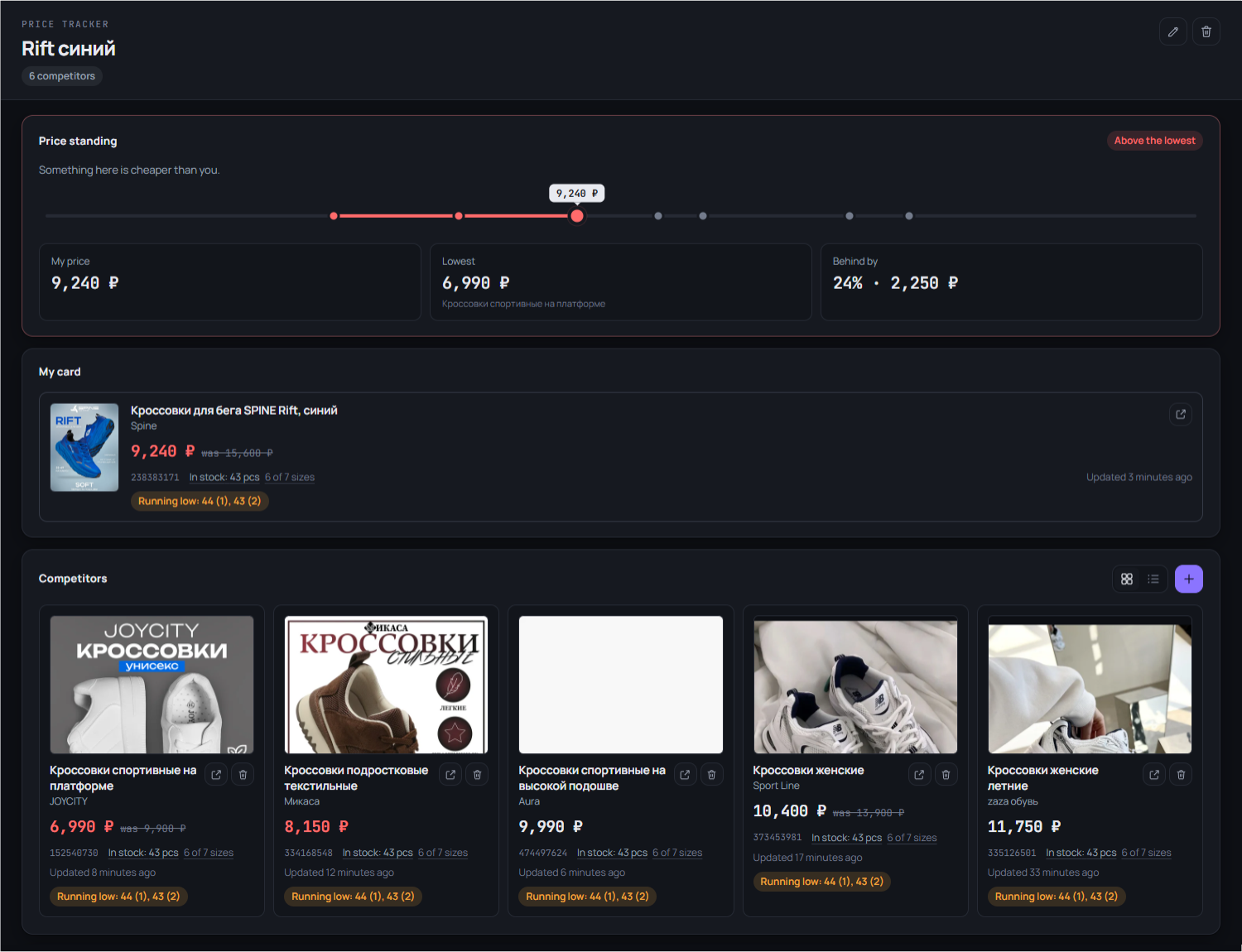
Every listing has its own competitor set, and the tracker identifies new listings as they appear on the market.
It tracks your place on the price ladder and the gap to the bottom, who moved and when, and what stock each competitor has left. It suggests a pricing corrections, and sends alerts over Telegram: immediate when a move needs a decision, a digest when it doesn't.
The bidder
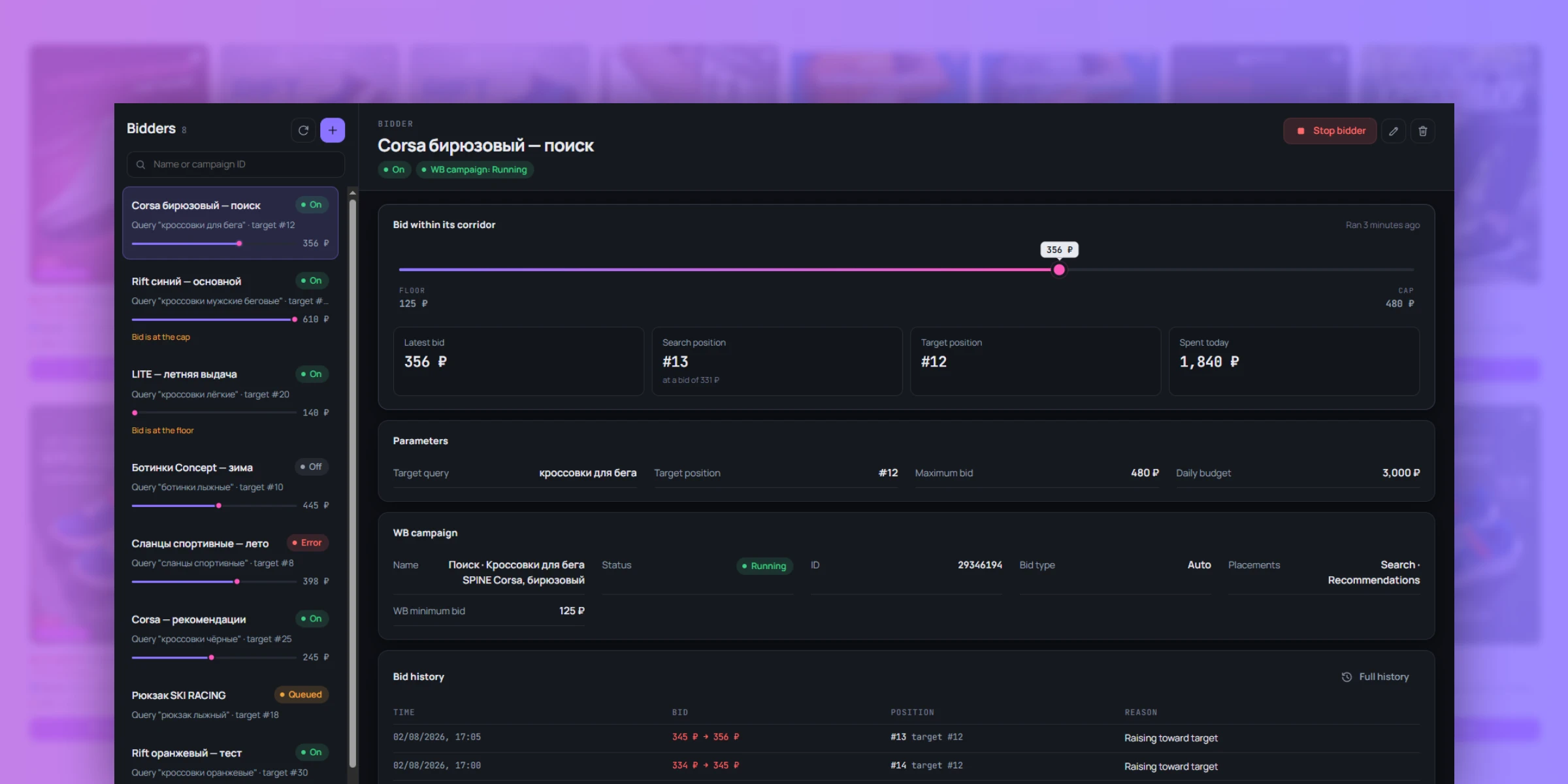
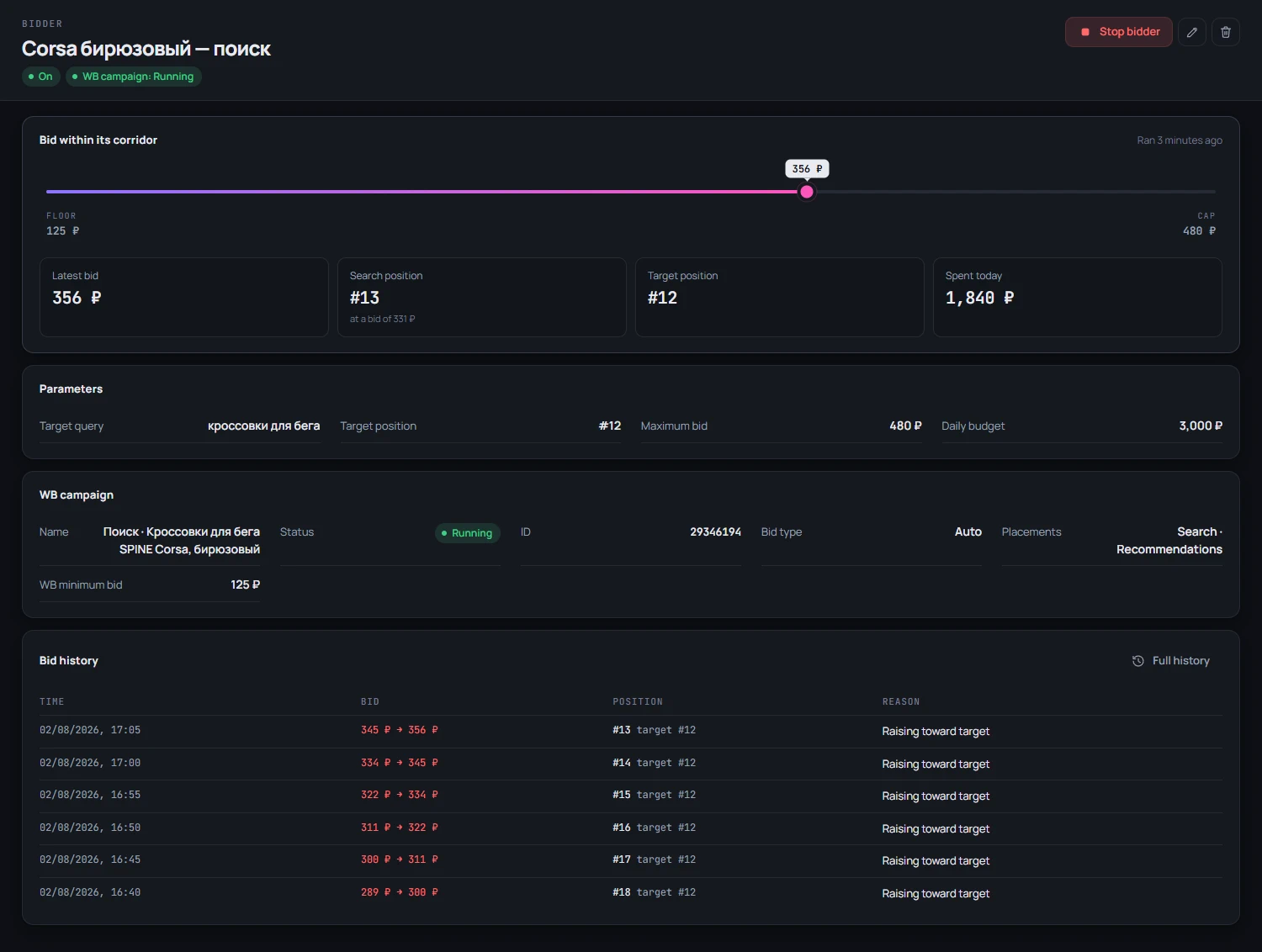
A campaign takes a search query, a target position, a bid ceiling and a daily budget. It works the bid toward that position in small steps, making sure your product is ranked exactly as high as it needs to.
Three limits stop it: the ceiling, the budget, and the marketplace's own floor. Each campaign carries its status where you can see it.
Details
- Client
- Spine Sports — ski boots, skis and equipment
- Marketplace
- Wildberries — search placement auctions and listing data
- Price tracking
- Per-listing competitor sets · automatic discovery of new competitors · price ladder position · stock and size availability · pricing suggestions
- Alerting
- Telegram — immediate on a move that matters, digest for everything else
- Bidding
- Per-query target position · bid corridor · daily budget · full decision log
- Interface
- English and Russian · dark and light · built to be read at a glance